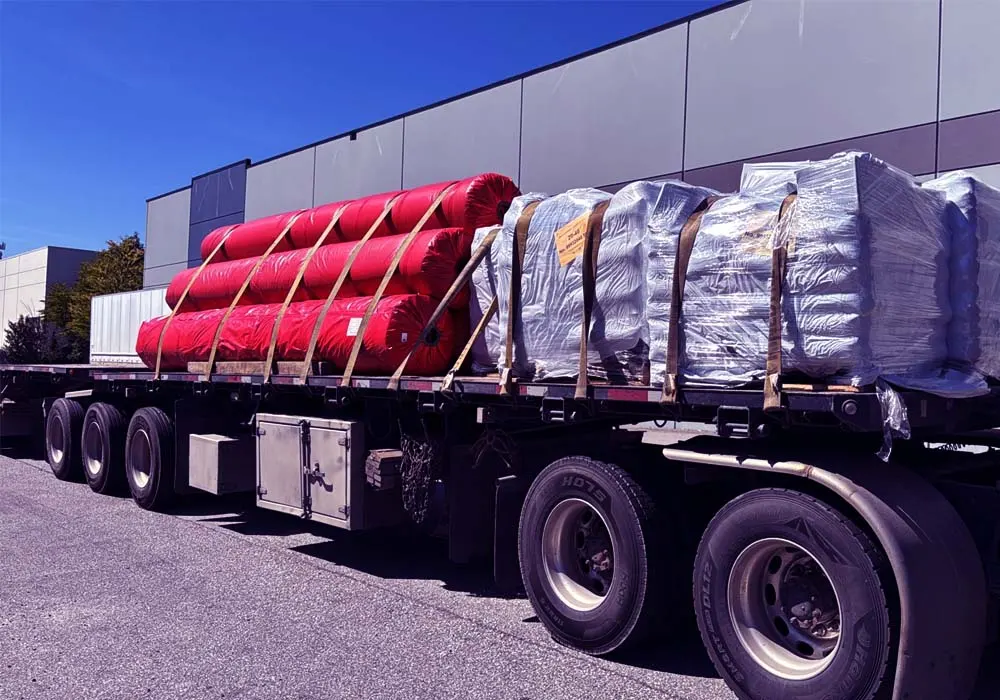
When a container arrives at the port, the job isn’t finished. Actually, that’s when another part of the job begins. The freight still needs to leave the port, get onto the right truck, travel to its destination, and eventually make it into a warehouse, distribution centre, job site, or wherever it needs to go.
It sounds straightforward. Most of the time, it is. But there are quite a few things happening between the port and that final delivery.
A missed pickup can cause a delay. A truck that’s too small can create another problem. Bad weather or traffic can change the timing of a route. And if the delivery is going across the border, there are even more things to keep in mind.
This is why good freight transportation is not simply about getting a truck from point A to point B. Someone has to think about the details before the truck even leaves.
At Greywolf Trucking, we help businesses move freight throughout British Columbia, Alberta, and across the United States. Our fleet includes everything from cargo vans to 53-foot dry vans, so we’re able to handle different types and sizes of shipments.
Let’s take a look at what actually happens once that freight starts moving.
Why Reliable Freight Transportation Matters
Most businesses do not think about transportation when everything is going well. The shipment arrives. The warehouse receives it. Everyone gets on with their day. It’s when something goes wrong that transportation suddenly becomes everyone’s problem.
A delayed shipment could mean a construction crew is waiting for materials. A warehouse might be expecting inventory that hasn’t arrived. A customer could be calling to ask where their order is. One delay can easily create another, and it soon look like a domini effect, out of control.
Depending on the business, that can lead to:
- Production delays
- Empty warehouse shelves
- Missed project deadlines
- Unhappy customers
- Extra operating costs
We have all had those days where one small delay somehow turns into five other problems. Freight can be like that too. That’s why having a transportation company that communicates clearly and knows what it’s doing can make such a difference.
Step 1: Getting the Container Out of the Port
Once your cargo reaches the port, it still has to get where it’s going. That sounds obvious, but port pickups involve more than simply showing up with a truck. Pickup appointments need to be arranged, paperwork needs to be ready, and the right equipment needs to be available. Timing matters too. A container sitting at the port is not getting any closer to your warehouse.
Greywolf Trucking coordinates container pickups and works to get freight moving out of busy port terminals without unnecessary delays.
Before the truck leaves, the team may need to take care of things such as:
- Confirming the pickup appointment
- Preparing transportation documents
- Coordinating schedules
- Planning the route
- Choosing the right vehicle
These details may not be visible to the customer, but they play an important role in making the delivery process smooth. And if you have ever had a shipment delayed because one small part of the process wasn’t ready, you already know how frustrating that can be.
Step 2: Choosing the Truck
Not every shipment needs the same truck. This is one of those things that sounds obvious until you are actually arranging a delivery.
A few boxes do not need a 53-foot trailer. At the same time, trying to move a large commercial shipment in a smaller vehicle isn’t going to save you money. It may just mean another trip. So the truck needs to match the freight.
Greywolf Trucking has several options available, including cargo vans, 3-ton trucks, 5-ton trucks, and tractor-trailers. Here’s what each one is generally used for.
Cargo Vans for Smaller or Urgent Shipments
Cargo vans are useful when the shipment is relatively small and needs to move quickly. They’re a good fit for things like:
- Urgent deliveries
- Small commercial shipments
- Auto parts
- Business documents
- Medical supplies
- Local freight
A smaller vehicle can also be handy in busy city and industrial areas where getting around in a larger truck is not always convenient. For a customer who needs a few boxes delivered quickly, sending a much larger truck would be unnecessary. Sometimes the simplest option is the right one.
3-Ton Trucks for Medium-Sized Loads
Then there are the shipments that are too much for a cargo van but do not really need a full-size trailer. That’s where a 3-ton truck can come in handy. Businesses use these trucks for things such as:
- Retail inventory
- Warehouse transfers
- Office furniture
- Palletized freight
- Commercial equipment
- Scheduled deliveries
They are a practical middle option. You get more cargo space without paying for a much larger vehicle that you may not actually need.
5-Ton Trucks for Larger Deliveries
If the shipment gets heavier or takes up more space, a 5-ton truck may be the better choice. These trucks are commonly used for:
- Manufacturing supplies
- Construction materials
- Wholesale products
- Large pallet shipments
- Industrial equipment
- Commercial inventory
One of the biggest advantages is being able to move more freight in one trip. For a business with a large shipment, that can make things considerably easier. Instead of coordinating two or three smaller deliveries, you may be able to get everything moving together.
So there are fewer trips, fewer schedules to coordinate, and less time spent wondering when the rest of the shipment is coming. That’s usually a win-win situation.
Tractor-Trailers for Larger Freight
And then there are the big shipments. When you are moving a full truckload, large commercial freight, or goods over a longer distance, a tractor-trailer and 53-foot dry van may be the better fit. These are commonly used for:
- Full truckload (FTL) shipments
- Large commercial deliveries
- Long-distance transportation
- Manufacturing and industrial freight
- Cross-border transportation between Canada and the United States
The enclosed trailer also keeps the freight protected from normal outdoor conditions while it’s on the road. For a large shipment, putting everything into one trailer can be much easier than splitting it between several smaller vehicles.
Step 3: Getting the Freight There Safely
Once the truck leaves the port, the focus shifts to the trip itself. And no, that doesn’t just mean following the GPS. Drivers have to consider traffic, construction, weather, delivery times, and the route itself. For shipments going into the United States, border requirements also become part of the planning.
A route that looks simple on a map can look very different when you are actually driving it with a commercial load. This is where experience helps.
Greywolf Trucking’s drivers know the roads throughout British Columbia and Alberta and have experience with cross-border transportation into the United States. That local knowledge helps when conditions change or a route does not go quite as planned. And sometimes things do change.
Weather can turn. Traffic can build up. A road can be under construction. A delivery window can become tighter than expected. You cannot control every situation on the road. You can, however, be prepared for it.
Safety is just as important as getting there quickly. Freight needs to be handled properly and secured for the journey so it arrives in the condition it left in. Getting there fast does not mean much if the cargo arrives damaged.
Step 4: The Final Delivery
The truck finally reaches the destination. You would think the job is basically done at this point. But that is not quite right!
A warehouse needs to know when the truck is arriving. Someone needs to be ready to receive the freight. The shipment needs to be unloaded safely, and everything needs to end up where it belongs. All these aspects matter!
A smooth delivery can help businesses:
- Keep inventory moving
- Meet customer demand
- Avoid production delays
- Keep warehouse operations organized
- Reduce unnecessary downtime
For some customers, the delivery might be a regular warehouse appointment. For others, it could be a time-sensitive shipment that has to arrive within a specific window. Either way, the goal is the same: get the freight where it needs to go without creating another problem for the customer.
At Greywolf Trucking, we do not consider the job finished simply because the truck has reached the address. The freight still needs to be delivered properly.
One Fleet, Different Kinds of Freight
No two businesses ship exactly the same way. A retailer might need a few pallets delivered to a distribution centre. A manufacturer could have equipment that needs to travel across the province. A construction company might be moving heavy materials. A wholesaler may be sending inventory between several locations. One truck is not going to be perfect for all of those jobs. That’s why having different vehicle options matters.
Greywolf Trucking offers:
- Cargo vans for smaller or urgent deliveries
- 3-ton trucks for medium-sized freight
- 5-ton trucks for larger palletized shipments
- Tractor-trailers for full truckload transportation
Choosing the right vehicle can help businesses avoid paying for space they do not need, reduce unnecessary trips, and make the delivery easier to plan. It’s a fairly simple idea: use the right truck for the job.
Serving Businesses Across BC, Alberta, and the United States
A business might start by shipping locally. Then things change. Maybe it opens another warehouse. Maybe it starts supplying customers in Alberta. Maybe it begins shipping across the Canada–US border. Suddenly, the transportation side of the business looks a little different.
Greywolf Trucking provides freight transportation throughout:
- British Columbia
- Alberta
- Cross-border destinations across the United States
Working with one transportation partner across different routes can make things easier. You already know who to contact, and over time, the transportation team becomes familiar with the way your business works. That familiarity matters more than people sometimes realize.
If your freight moves regularly, you do not want to explain the same requirements from scratch every time you make a booking.
Why Businesses Work With Greywolf Trucking
When a business hires a trucking company, it is not really just hiring a truck. It is trusting someone else with part of its business operation.
Customers want to know that their freight will be picked up when it should be, handled properly, and delivered without unnecessary drama. They also want to be able to get an answer when they have a question. That’s where a good working relationship comes in.
Greywolf Trucking is a family-owned company that combines personal service with a fleet capable of handling different shipment sizes.
Customers can expect:
- Reliable deliveries
- Responsive customer service
- Experienced drivers
- Flexible scheduling
- Different vehicle options
- Careful freight handling
- Cross-border transportation
The goal is not to make transportation sound complicated. It is actually the opposite. You have freight to move. We help you figure out how to move it and take care of the transportation side so you can get back to running your business.
Keeping Your Freight Moving
From the moment a container arrives at the port to the moment it reaches a warehouse, there are quite a few moving pieces. The pickup has to be coordinated. The right truck needs to be selected. The route needs to make sense. The freight needs to be handled carefully. And someone needs to make sure the final delivery happens when it’s supposed to.
When all of those pieces work together, the process can feel pretty simple from the customer’s side. And honestly, that’s the goal. You should not have to spend your day worrying about where your shipment is.
At Greywolf Trucking, we provide dependable freight transportation throughout British Columbia, Alberta, and across the United States. With different vehicle options, experienced drivers, and a focus on straightforward customer service, we can handle everything from smaller deliveries to full truckload shipments.
Need to move some freight? Contact Greywolf Trucking to discuss your shipment, request a quote, or arrange your next delivery.
Frequently Asked Questions
What is freight transportation?
Freight transportation is simply the process of moving commercial goods from one place to another. This can involve different methods, including road, rail, air, or sea. Greywolf Trucking focuses on road freight transportation throughout British Columbia, Alberta, and into the United States.
What happens after a shipping container arrives at the port?
Once a container arrives, it needs to be scheduled for pickup and moved to its next destination. The shipment may then go to a warehouse, distribution centre, retail location, manufacturing facility, or another commercial site. Getting the container picked up on time can help avoid unnecessary delays and storage charges.
Why does choosing the right truck matter?
The right truck gives your freight enough room without making you pay for capacity you don’t need. Greywolf Trucking offers cargo vans, 3-ton trucks, 5-ton trucks, and tractor-trailers for different shipment sizes.
Can Greywolf Trucking handle both small and large shipments?
Yes. The fleet includes vehicles for smaller local deliveries as well as larger commercial and full truckload shipments.
Does Greywolf Trucking provide cross-border freight transportation?
Yes. Greywolf Trucking provides transportation all around Canada.
What areas does Greywolf Trucking serve?
Greywolf Trucking serves businesses throughout British Columbia and Alberta